
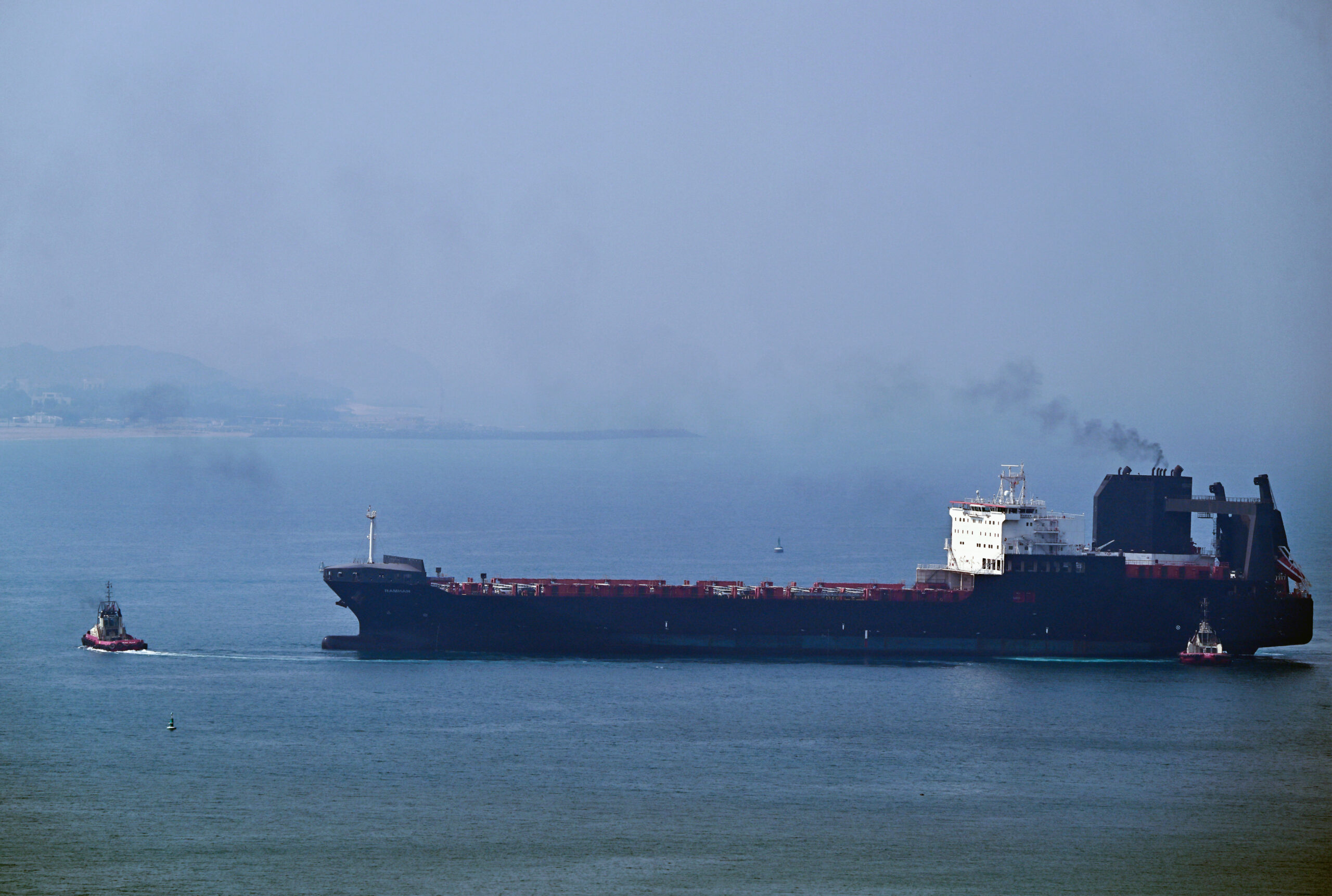
The U.S. and Iran expanded their targets in the latest round of strikes on Friday, as fighting over the control of the Strait of Hormuz reignites fears of an all-out war.
Read more Spain could make World Cup history: The first to win men’s and women’s trophies back-to-back
Middle East conflict
The U.S.-Iran battle over the Strait of Hormuz raises risks for global waterways
The U.S. military said it struck Iranian air defense sites and military logistics infrastructure in its attacks, as it sought to pressure Iran to lift its chokehold on the strait. Iran said those targets included six bridges in the Hormozgan province facing the key waterway, as well as power infrastructure. It vowed to retaliate by targeting the infrastructure of U.S. allies in the region.
Legal scholars have warned that attacks on infrastructure with wide civilian use in some circumstances could constitute a war crime under international law.
President Trump threatened to strike Iranian bridges this week if Iran failed to return to talks to end the war.
Iranian state media said at least seven people were killed and 20 wounded in the latest U.S. strikes on infrastructure. According to Iranian health officials, 38 people have been killed and over 400 wounded in the past week.
Middle East conflict
U.S. fires a new wave of strikes on Iran and hits a tanker trying to skirt its blockade
The overnight U.S. strikes also appeared to have destroyed a maritime control tower in the Iranian port of Chabahar in the Gulf of Oman, another key commercial gate in the strait. A photo of the bombed-out tower collapsing was shared on social media by U.S. Defense Secretary Pete Hegseth.
Iran retaliated Friday by launching missiles and drones against U.S. allies in the Gulf, which host U.S. military bases. Iran’s Revolutionary Guard said it targeted Kuwait, Bahrain and Oman. Iran’s Revolutionary Guard also said it attacked U.S. special forces in al-Tanf in Syria, a former U.S. military outpost, from which U.S. troops withdrew in February, claiming casualties and damage.
Read more The reality of voting security in America
There was no immediate response by U.S. Central Command (CENTCOM) to Iran’s claim.
Authorities in Kuwait, Bahrain and Qatar, a key mediator in talks between the U.S. and Iran to end the war, said Friday their air defense systems were intercepting hostile attacks. Jordan also staved off Iranian missiles, according to its state media. Iranian strikes were also reported in Iraq’s Kurdistan region, where at least eight opposition fighters were killed, according to the Kurdish Iranian opposition group.
The U.S. reinstated a military blockade on ships entering or exiting Iranian ports earlier this week. It followed the launch of strikes on Iran that the U.S. military says are aimed at “degrading Iranian military capabilities and holding Iran accountable for recent attacks on commercial shipping.”
Middle East conflict
The U.S. is back to blockading Iran as the Strait of Hormuz standoff escalates
Since the reimposition of the blockade, the U.S. military said it has “redirected” three vessels that tried to breach the blockade, struck and disabled an oil tanker that disobeyed orders and boarded one to ensure compliance.
Impacted by the escalation, oil prices jumped 10% this week.
Iran has shut off the Strait of Hormuz since the U.S. and Israel began the war on Iran on Feb. 28. Iran’s leaders sought to impose a toll on the cargo and oil vessels moving through the strait, attacking ships that did not comply with its orders.
The U.S. has urged ships to use a southern route through the Strait of Hormuz that hugs the coast of Oman. Iran has said this violates the memorandum of understanding signed last month between Iran and the United States.
Read more Does control of the Strait of Hormuz set a worldwide precedent?