
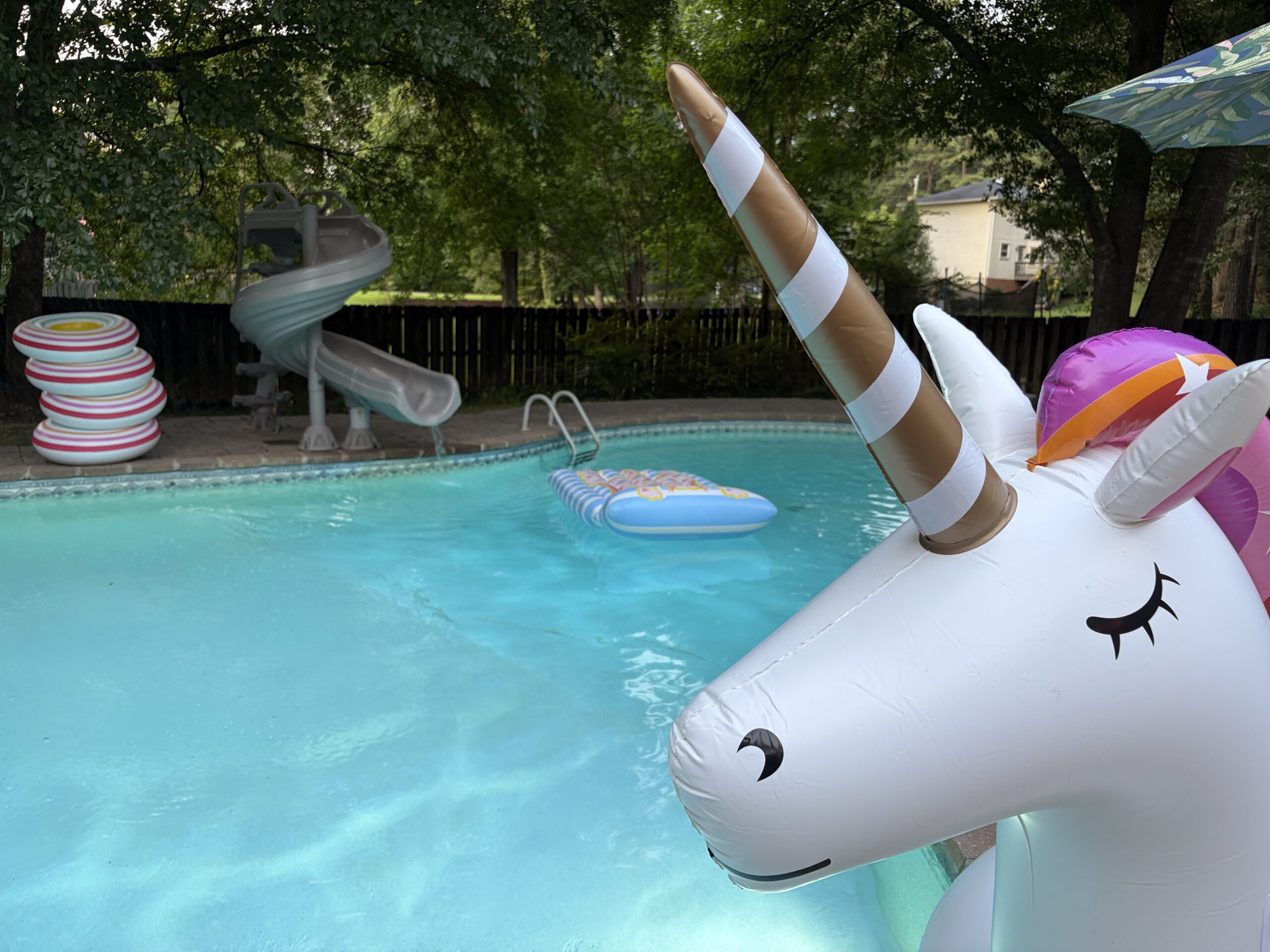
A scorching Alabama day isn’t so bad — if there’s a pool party. Meghan Clopton invited dozens of guests to a summer birthday celebration for one of her kids last year, complete with water guns, a twisting slide and plenty of inflatables.
Read more How young people feel about American identity, on the nation’s 250th birthday
The guests had just one shared question:
Her answer? She rented it.
“It’s part of the culture now, right? Just, like, take over someone else’s house or pool for the day or the weekend,” Clopton said.
“For a fee,” her husband Taylor Clopton added.
They rented the backyard pool through Swimply, one of a small but growing number of Airbnb-style companies that lets you rent pools, along with other private spaces including tennis and basketball courts. These listings are a growing side of the sharing economy that have made it common, and often near-frictionless, to rent someone else’s property, from cars to guest bedrooms.

Weather
A ‘heat dome’ is driving dangerous heat across the U.S. into the July 4 weekend
Clopton paid $381 for that birthday party, which allowed her to invite up to 30 guests for three hours of pool time.
The pool’s owner, Jasmine Lawson, said she’s had bookings for graduations parties, book clubs and photo shoots. Overall, she’s hosted over 1,000 guests a year at her Birmingham property. “And it grows every single year,” Lawson added.
Along with a hot tub and an 8-foot-deep pool, Lawson’s guests get access to an air conditioned room in her home with a table for laying out a party spread, plus a private bathroom. They also get to choose from a catalogue of 50 different pool floats. (The white, human-sized inflatable unicorn that sprays water from its horn is a favorite.)
Lawson gives all her guests a walk-through when they arrive, before going upstairs to work. “But if they ever need anything, I’m right down here helping them as soon as I can,” she said. Swimply users can use a filter on the platform for more privacy — that can include factors like whether or not the pool is within view of the home or if the owners will be around.
Lawson originally started renting out her pool to help cover the end-of-life veterinary costs for one of her dogs, a Cavalier King Charles Spaniel. Now, Lawson uses the bookings to boost her income and cover the pool’s maintenance.
“When you own a pool, every time you turn around something happens and it’s $1,000,” Lawson said.
Swimply founder and CEO, Bunim Laskin, said covering those expenses was the original idea for the company. He started Swimply in 2019, inspired by his experience of offering to pay a pool-owning neighbor to borrow it for a party with his 11 siblings.
Today, according to a company spokesperson, Swimply has listings in 150 cities, and so far has had more than 275,000 reservations this year, about 50% more than last year.
Business
A trip to Europe? In this economy? Expensive flights keep vacations closer to home
While homes listed on Airbnb, the best-known sharing platform, are often used by out-of-towners, such as for business trips or vacations, Swimply’s rental pools are more often used locally. Guests book pools near home, often for staycations.
Read more Australian officials ask fans to respect the privacy of Neil, a trouble-making seal
Laskin said the company has done well during tough economic times. “We really became big for the first time during the pandemic,” Laskin said. “Travel was impossible, and people more than ever needed a way to supplement their income.”
Renting out a swimming pool comes with an important, and possibly expensive, question: Who’s responsible if someone gets hurt? After all, pools can be dangerous, especially for young swimmers.
Swimply covers up to $1 million in liability for hosts, similar to Airbnb’s policy for home rentals.
Courts have been wrestling with this kind of question when it comes to gig and sharing economy companies, according to Lindsey Cameron, assistant professor at the University of Pennsylvania’s Wharton School of Business. For example: Who’s liable if a rideshare driver harms a passenger — the driver or the company? “Because there is not an employer, as one typically thinks of, that you can say, ‘You have responsibility for the products that you are putting out into the world,'” she said.
Some state governments are trying to hash out these kinds of issues, too. This week, Minnesota’s Supreme Court agreed to hear a case about whether pools on the Swimply app should be considered public facilities — and therefore subject to government licensing regulations, possibly including state inspections. (A lower court ruled in favor of the regulations earlier this year.)
Saša Pekeč, a professor of business administration at Duke University’s Fuqua School of Business, compares it to the early days of ridesharing apps, which were banned in some cities while regulations were still being worked out.
“Some local communities might just say that ‘No, you cannot rent your pool because there’s too much liability,'” said Pekeč.
National
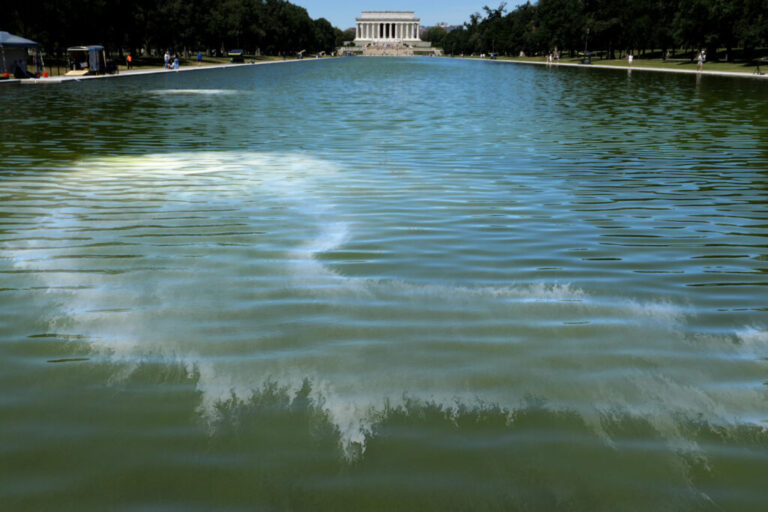
Algae clouded Trump’s vision for the Reflecting Pool. But scientists aren’t surprised
The prospect of a pool being used as a rental has even given at least one private company pause. Lawson said her pool maintenance company dropped her as a client, citing worries that they’d be held responsible if a guest had a bad reaction to pool chemicals. Now she maintains the pool on her own. (“It’s been crystal clear,” she said.)
But other than having to offer the occasional Band-Aid, Lawson said, she’s never had an incident. And that’s with weekends with three or four bookings back-to-back. This weekend she’s got an all-day Fourth of July birthday party booked.
After renting Lawson’s pool, Meghan Clopton got quotes for building one in her own backyard. She was shocked when they came back ranging from $60,000 to $110,000. While Clopton works out the budget and savings, she plans on sticking with renting. She’s also dreamed about paying down that future pool by listing it on Swimply.
Read more Croatia vs. Portugal: What happened in those final, chaotic minutes
“It’s absolutely a great business plan and I would not say no,” Clopton said.