
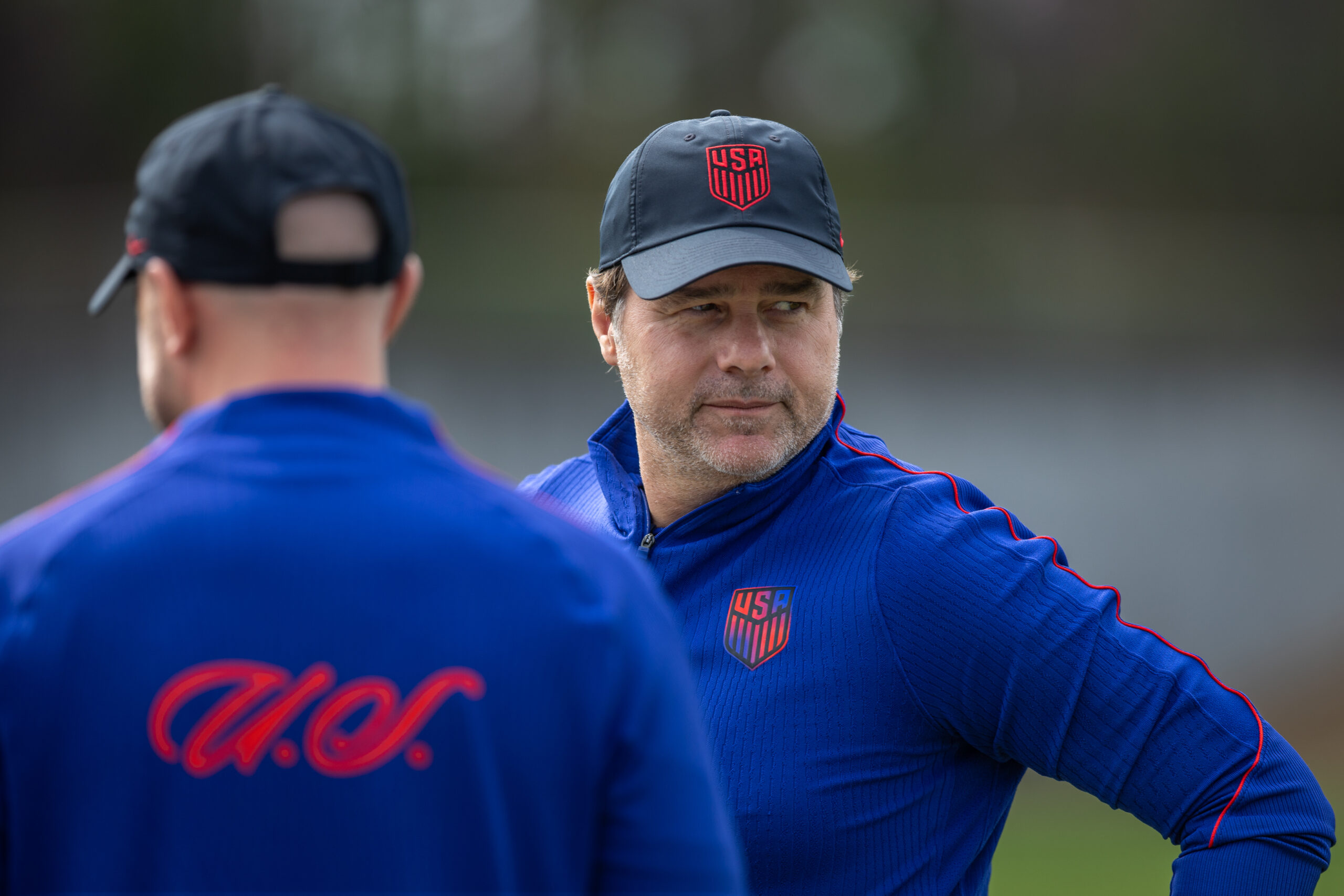
IRVINE, Calif. — In 2024, Mauricio Pochettino was looking for a job.
Sports
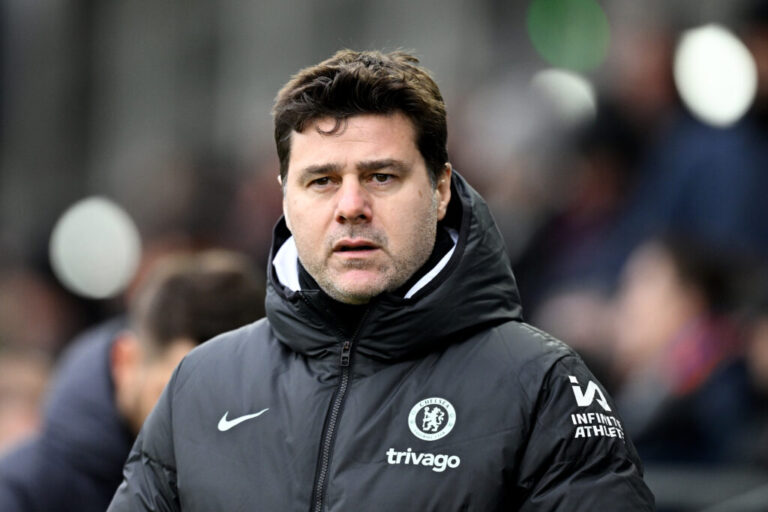
Mauricio Pochettino is named the new coach of the U.S. men’s national soccer team
With a resume like his, it was not going to be difficult: As a defender, Pochettino played in major professional soccer leagues in Spain and France, and represented the Argentinian national team at the 2002 FIFA World Cup. Then, as a coach, he had managed some of Europe’s most recognizable clubs — Tottenham Hotspur, Paris Saint-Germain, Chelsea — and worked with stars like Harry Kane, Lionel Messi and Kylian Mbappé.
Read more If a Lyme disease vaccine gets approved, how would it go over? We asked hunters
By contrast, the U.S. head coaching job was seen by many in the soccer world as a step down in prestige.
For decades, the U.S. has been the supposed “sleeping giant” of international soccer that could never seem to wake up — a country with the population and resources to compete with the powerhouses of the sport in Europe and South America but lacking the culture to do so.
The 2026 World Cup, hosted on home soil, represented a once-in-a-generation opportunity to take a big step toward changing that status quo.
The stakes were through the roof, but the team was stumbling: In the summer of 2024, with less than two years to go before the World Cup, the squad was unceremoniously bounced from the Copa América, a disaster that led to the firing of the head coach.
With the help of deep-pocketed donors, U.S. Soccer swung big and landed the big-name hot-shot coach whose resume was by far the most prestigious — and salary by far the highest — of anyone hired to the position.
Yet it would not be simple to turn things around on such a short timeline. Pochettino acknowledged as much in his introductory press conference, referring to the “amazing project and challenge that we have ahead.”
Once he arrived, Pochettino found the situation was worse than he had realized, he recently told reporters. Players did not seem ready or excited about the upcoming World Cup, and much work remained to identify new talent.
Most worrying, he has said, was a culture of complacency among players, especially those who were regulars on the national team. That shocked Pochettino, who is from Argentina, a country that lives and breathes soccer, and especially worships its national team, captained at this World Cup by the superstar Messi.
Soccer Edition
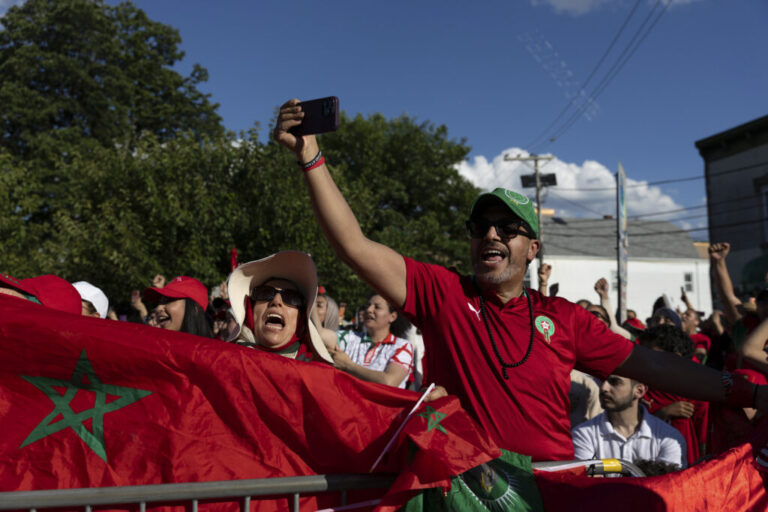
It’s not just Cape Verde: African soccer is having a World Cup moment
Argentinian players are “desperate” to play for the national team, no matter the game, he told reporters soon after he started the job.
“In Argentina, a player doesn’t choose which game to go to,” he said then. “The Argentinian player takes every call-up as though it’s the World Cup Final and as though it’s his last ever opportunity.” Bringing that mindset to the U.S. team, he said, would give them the chance to achieve something important.
To accomplish that meant a speed run on resetting the roster. Regular players were out. New guys were in. Everyone would have a chance.
Over the course of around a dozen camps and tournaments across the 18 months leading up to the World Cup, Pochettino tried out more than 70 players. He asked them all to compete equally, no matter their experience, seniority or the stature of their club team.
At first, the results were ugly.
A string of losses in early 2025 — 0-1 to Panama, 1-2 to Canada, 1-2 to Turkey, 0-4 to Switzerland — had the idea of a deep run in the World Cup feeling like a fantasy. That summer, a dispute between Pochettino and several players, including star winger Christian Pulisic, over whether to participate in a pair of friendlies before the Gold Cup tournament led to Pulisic and others being left off the tournament roster.
Still, in press conference after press conference, Pochettino explained that when building toward something, the process may not always look pretty. “It’s hard work and slow work, also — as many have said, the work of an ant, little step, little step,” he said a year ago.
Read more As Supreme Court expands Trump’s immigration power, experts warn of steeper U.S. population decline
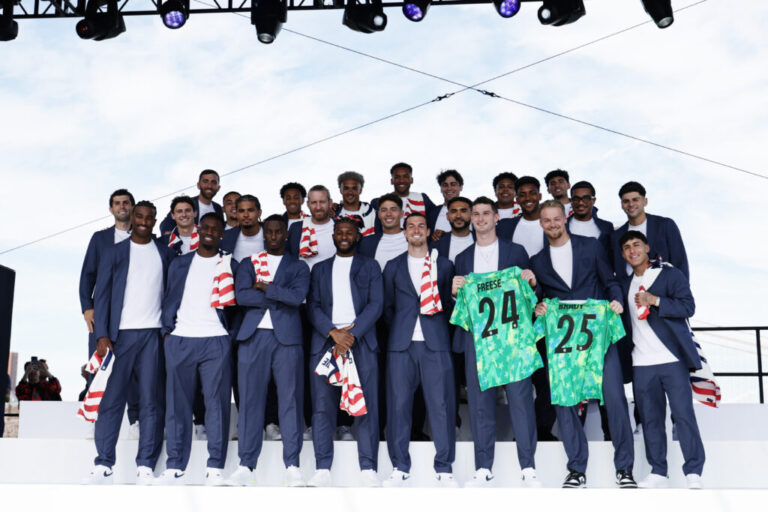
But that process has paid dividends. Pochettino turned up several new players who are now on this World Cup roster — including starting defender Alex Freeman and go-to goalkeeper Matt Freese.
It also changed the way players saw each other and themselves, they say. “Culture improves through winning, culture improves through competition,” said midfielder Tyler Adams. “Bringing in players that hadn’t been in the fold and competing to make sure that no one’s getting comfortable is something that we had to — not , but there’s a respect level for every single person that comes in and around the group, and everyone feels included. And I think that’s important.”
Soccer Edition
A mix of veterans and newcomers will represent the United States at the World Cup
Then came the results.
Last fall, the U.S. pieced together an unbeaten streak of five games against World Cup-caliber opponents. Then, in the spring, the team played friendlies against a handful of top teams — Belgium, Portugal, Senegal and Germany — and although they won only once, the Americans were competitive when their starting lineup was on the field.
After the final friendly, when a reporter remarked on the team’s fluidity and intensity, Pochettino looked satisfied. “Your strategy can be brilliant. But if you don’t have the energy, the commitment, the trust, the confidence, all the values that are really important, it’s impossible to play well,” he said. He and his staff were the same coaches they were a year ago, he continued. “But the priority was to create good culture. There’s no other secret.”
On the field, the offense looks fluid and aggressive. In the box, where U.S. teams of the past have looked timid, this roster has been decisive. In the first two matches of the World Cup, the Americans scored six goals, double their total from the 2022 tournament in half as many games.
Forward Folarin Balogun, whose two goals against Paraguay made him the first American man to score multiple times in a single World Cup game in nearly a century, credited Pochettino entirely. “The coach was brought in here to give us a structure, a foundation, an identity,” he said.
And Pochettino’s approach has translated to a new personality for the team on the field, too, says forward Timothy Weah.
“It’s that South American grit. When you look at teams like Argentina, Paraguay, when you look at Brazil, the Colombians, they always have that edge because of their mentality,” he said. “We were always the good guys, always the nice guys. Now he’s teaching us to be the bad guys.”
Soccer Edition
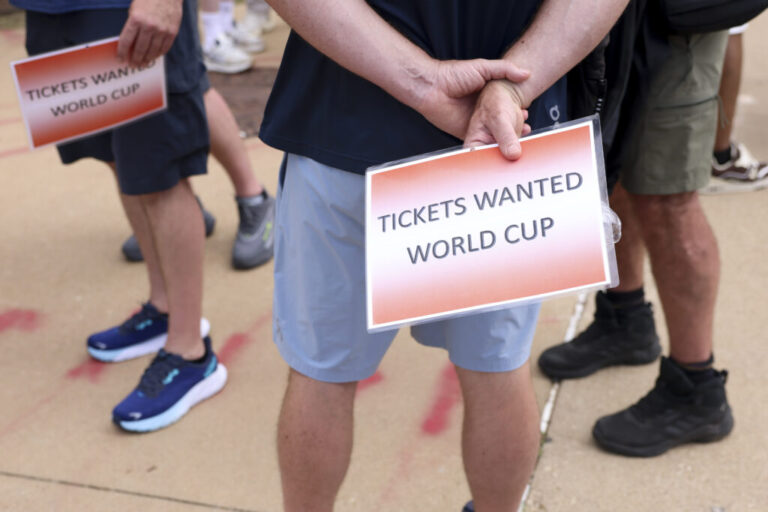
World Cup fans are missing games after their resale tickets fall through
Soon, Pochettino’s time with the U.S. could be coming to a close. His contract is up after the World Cup. He has not ruled out a return to U.S. Soccer, but it would surprise no one if he left, either.
Until the day comes, he is enjoying American culture. “I’m in his office yesterday, and he’s listening to country music. It’s funny to see,” said Pulisic. “But then he brings his Argentinian culture, the staff. It’s a unique bond with the group for sure.”
And suddenly the expectations have grown for the team: A win in Wednesday’s Round of 32 match against Bosnia and Herzegovina is now a must, and the U.S. could face Belgium in a possible Round of 16 matchup, or perhaps South Korea or Senegal.
A win would put the U.S. in the quarterfinal, matching the deepest run by the American men in the modern World Cup era. And it would set a new record for the U.S. men’s team with four World Cup wins, twice as many as their previous high mark.
The players say, finally, the outside world sees what Pochettino has convinced them to believe all along: Why not us?
“It’s a process. It’s not gonna be figured out overnight. It’s not gonna be figured out in one camp, or sometimes in six months, or 12 months, as fast as everyone wanted it to,” defender Mark McKenzie said. “But in this group, we had a whole staff and group of players who knew and had the belief that we could honestly accomplish what we set our minds to.”
Read more Venezuelans in Colombia scramble to send aid as earthquakes death toll increases